Book club guide
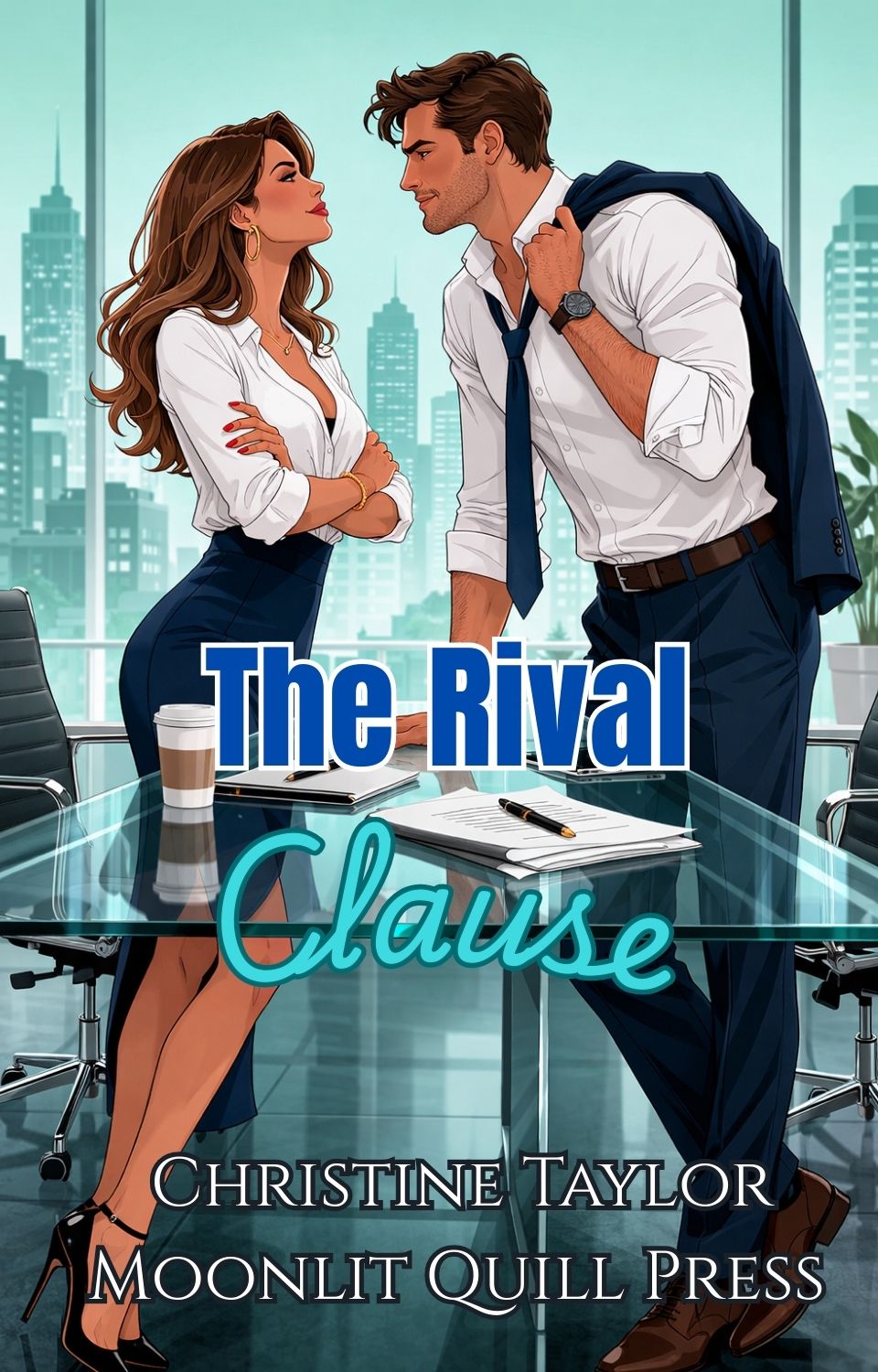
The Rival Clause
By Christine Taylor · The Clause
Welcome to The Rival Clause. Pour a strong cup of coffee, bring a few friends, and settle in to talk about Evelyn Park, Dominic Hale, and the eight-week contest that throws two rival firms into the same room.
Before you read
- The story opens with two competing firms pitching for the same acquisition. When you have to work beside someone you are also being measured against, what helps you stay honest, and what tempts you to hold back?
- Stories about rivals often ask how much of ourselves we can share with someone who might benefit from knowing it. Where do you draw the line between protecting your work and trusting a colleague?
- Money, ambition and loyalty collide in a workplace romance. What do you hope the book does with that mix, and what would make you doubt it?
- Enemies-to-lovers stories depend on friction that turns into respect. What makes a rivalry feel earned to you, and what makes it feel forced?
Discussion questions
Spoilers ahead. Finish the book first.
- Stellar's board introduces the "Rival Clause," asking Evelyn and Dominic to co-lead a pilot campaign while being evaluated separately. Was this a fair way to choose a firm, or a setup that guaranteed trouble? What would you have done in their place?
- In their first strategy session, Dominic proposes "trust protocols" instead of protection protocols, including documented contributions and an escape clause. Why does Evelyn agree, and do you think the structure helps their trust grow or just gives it a safety net?
- Evelyn left her old agency after a colleague presented her work as his own while she was introduced as "the assistant who helps with research." How does that history shape the way she reads Dominic's kindness, and is her suspicion fair?
- Dominic says he started Hale Creative to prove he was not his father, who was absorbed and erased by a larger firm. How does that story complicate his role as the acquirer, and did it change how you saw him?
- The relationship grows while one company is meant to absorb the other. How does the book handle wealth, power and professional boundaries between two people being judged by the same board? Did Dominic and Evelyn stand on equal footing, and should they have disclosed more to Patricia or James?
- When the leaked metrics threaten Evelyn's reputation, Dominic defends her in front of the whole board, and she immediately asks what his angle is. Was he right to speak up, and was she right to question it?
- Evelyn finds Dominic's signature on a vendor authorization dated before the leak and confronts him in his office. What did she get right and what did she miss, and what do you think would have happened if she had asked a different question first?
- Dominic investigates privately and decides not to expose David and Rob, because it would gut Park Strategy, and instead withdraws Hale Creative from the absorption clause. Was this generosity, a gamble, or too much to carry alone? Should he have told her what he knew?
- Evelyn later tells the board the competition was compromised, protects David's name in public, and proposes a partnership with a 60/40 revenue split and a joint oversight committee. Is this a satisfying resolution to the central conflict, and does the fairness of that structure matter to you?
- At the close, the two firms announce a partnership while keeping their independence, with Patricia noting that the professional and personal partnerships developed together. What does the book say about whether love and work can share a table, and what risks does each of them still carry?
Pairing menu
- Drink
- Black coffee, the way Evelyn takes it in the strategy room, or a whiskey or bourbon by the lodge fireplace after a long day of exercises.
- Bite
- A plate from a casual buffet lunch in a sun-filled room, the kind of midday meal where rivals end up at the same small table.
- Setting
- A terrace overlooking pine forests and distant peaks, with crisp mountain air and a whiteboard of half-finished campaign ideas nearby.
Haven't read it yet?