Book club guide
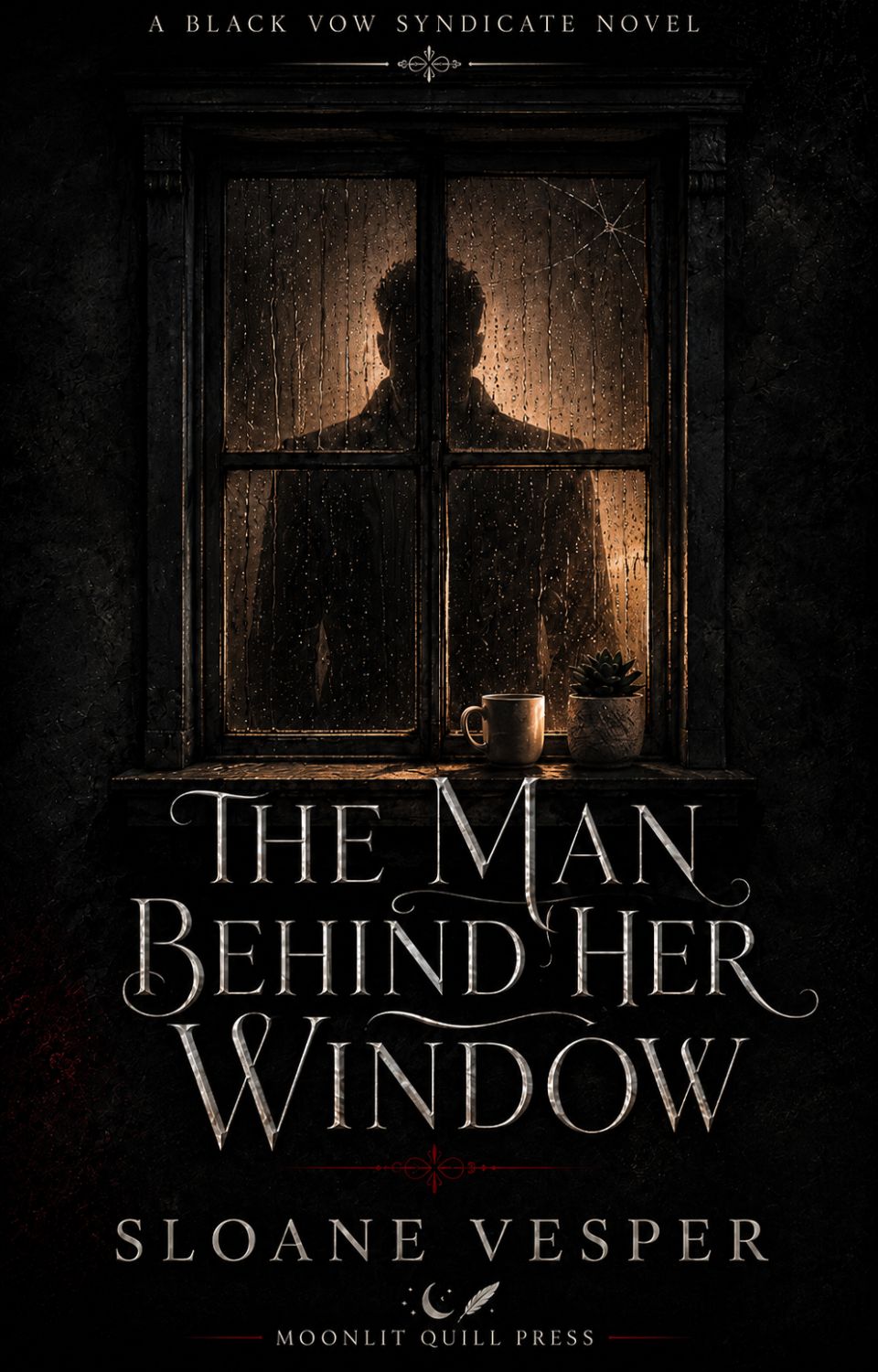
The Man Behind Her Window
By Sloane Vesper · The Black Vow Syndicate
Welcome, and thank you for gathering to talk about The Man Behind Her Window, the story of prosecutor Kelly Foster and Jonathan Varga, the Black Vow operative who has been watching her. This is a dark romance for mature readers, built around stalking, a steep power imbalance, violence and institutional corruption, so come ready for a serious conversation and take care of yourself as you read.
Before you read
- The subtitle calls this a dark syndicate stalker romance, and the book opens with a content warnings page. What do you hope a romance can do with a premise like that, and what would the story have to show you before you could trust it?
- Kelly Foster is a felony prosecutor who keeps receipts, photographs everything and trusts records over people. How do you feel about a heroine whose whole method is evidence and procedure, and what kind of situation do you think would test it hardest?
- Her husband was a public defender shot on a courthouse plaza, and the official file calls it random. When does a refusal to accept an official story read as strength to you, and when does it start to read as obsession?
- The chapters alternate between the two leads, so you see the watcher and the watched in turn. How does it change your sympathy to read both sides of a power imbalance, and which side do you expect to find harder?
Discussion questions
Spoilers ahead. Finish the book first.
- In Chapter 1, "Eleven Seconds," Kelly finds the deadbolt repaired and the silent third stair, photographs every room, lifts a mysterious file with kitchen tongs, and still does not call the police. What does her reasoning tell us about how she handles fear and grief, and where does her professional method protect her versus blind her?
- In Chapter 2, Varga narrates his rules: he enters only when she is gone, takes nothing and never opens the nightstand drawer. He also admits, "Mercy would have been leaving her alone." How does the book want us to read rules like these, and did the alternating narration make him seem more sympathetic, more dangerous, or both?
- In Chapter 11, Kelly tells him, "Do not make restraint look like consent." He knew her routines, her grief and her body's tells long before she knew he existed, yet she also holds real power in the story: she orders him, sets terms and can say no. Can choice mean the same thing when one person holds that much knowledge, and does the book give an answer or leave it open?
- Withholding runs through the whole book: Varga keeps Maribel's name from Kelly and sits on the news about Ben's badge for four hours, while Kelly lies to a judge and tells Priya she is not alone when she is. Using Kelly's standard that he must not "decide what I can survive," which withholding felt like protection to you and which felt like control?
- In Chapter 14, a man dies in a way Varga arranged without ever touching him. He says, "I made his exits narrower than his choices," and Kelly answers, "Do not make it elegant." Afterward she keeps the dead man's badge and walks out beside Varga. How does the book frame a killing carried out on her behalf, and do you think it holds him accountable?
- Judge Warren Ellery writes Kelly a kind condolence note that includes, "Some doors are yours to open when you can bear them," while the criminal who stalks her tells her uncomfortable truths. What is the book saying about which institutions deserve trust, and was Kelly right to lose faith in the courts?
- Priya checks in with the same word every twenty minutes, and Kelly shuts her out of the worst of it to keep her safe. Was keeping her "outside the felony" loyalty or another kind of control, and what did the friendship cost each woman?
- In Chapter 15, Kelly says the body's response to what she has seen is something she must live with: "Not instead of horror. With it." Later she gets a key, a lockout card and an ownership line that puts her name above his. When he starts asking, "May I come in," did the balance of power really change, or does the romance still glamorize what he did?
- Kelly reads nine protected identities aloud to Varga, loses a witness she placed, and then trades a public prosecution of Ellery for private handling by Michael Kincaid, saying afterward, "I gave Ben up." What did she risk and lose along the way, was the trade justice, and what did you make of her quietly learning to keep a secret from Varga the way he once did from her?
- In the final chapter, Kelly installs a camera in her own front room, names it THE WINDOW, puts Ben's watch in the frame and lets Varga watch her grieve. Who holds the lens at the end, is this healing, a rebuilt trap, or both, and where do you want the two of them to go next?
Pairing menu
- Drink
- A cup of courthouse coffee, the kind Kelly says she always hates, "too hot and badly made," carried through a long, tense morning.
- Bite
- Something simple from a well-stocked pantry, since Kelly's cupboards are full of food she no longer cooks and her flour tin holds only old recipe cards.
- Setting
- A quiet front room at dusk with a radiator ticking, a wristwatch on the side table and a window you keep glancing at.
Haven't read it yet?