Book club guide
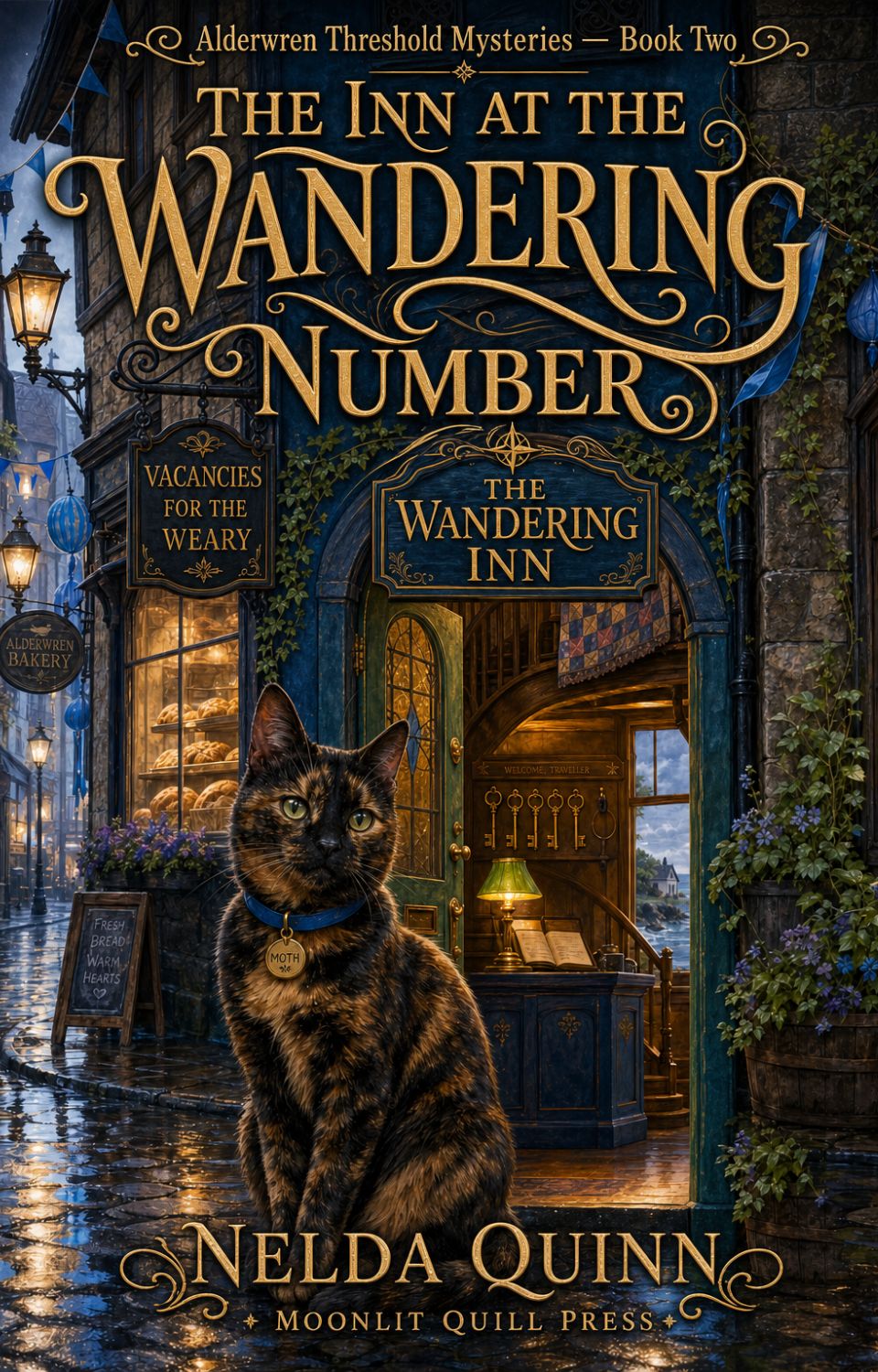
The Inn at the Wandering Number
By Nelda Quinn · The Alderwren Threshold Mysteries
Welcome to Alderwren. Pour a cup of tea, bring a friend or two, and settle in to talk about Angela Lark, her tortoiseshell cat Moth, and the festival week when a small blue inn turns up where no inn should be.
Before you read
- Think of the last place where you felt truly rested. What made rest possible there: the food, the quiet, the company, or simply knowing you could leave whenever you liked?
- The title promises an inn with a number that wanders. What do you expect from a mystery where the puzzle may be a place rather than a person?
- When you are worn out, what do you most hope someone will take off your hands, and what would you never want anyone to take from you, however kindly they offered?
- Alderwren is a town where doors open by agreement and hospitality is voluntary. If you could write one rule for a town like that, what would it be?
Discussion questions
Spoilers ahead. Finish the book first.
- The Prologue shows Elspeth Harrow grateful for the inn's relief and "beginning to fear what gratitude had cost her." Where in your own life has comfort come with a hidden price, and how early did you notice it in her story?
- Each guest hands the inn one thing to carry for a night: Coralie her cottage by the sea, Hollis his ability to refuse, Sena her certainty that she may leave, Bram his son's name, Lissa her duty to decide about the shop, Perry his fear. Which loss unsettled you most, and which guest's reasons for asking did you understand best?
- Every guest describes a different innkeeper, and little Perry points straight at Tobin. Why do you think the inn builds a face out of what each guest expects, and what did that reveal about the real person behind it?
- Alderwren answers the inn with signs that read "WELCOME, WITH PERMISSION" and later "YOU MAY LEAVE TIRED." Did the festival's rules for rest feel wise to you, and what did you make of Maud Cresset's ten minutes in the red chair?
- In the kettle's memory, Elspeth says "I stop," and the inn hears her, then rewrites it as rest. Why is that moment worse than a simple misunderstanding, and did it change how you felt about the inn itself?
- The archive once filed the caretaker's identity as "nonessential," and Mr. Pell and Sable have to face that. What does the book say about institutions that honor the guests and forget the people who serve them?
- Pippa is tempted by a perfect green room with "No need to trust strangers" among its promises, and answers, "I cannot protect everyone from living." Have you felt the pull of that kind of certainty, and what did it take for her to walk away?
- The inn slips into Marigold Court through a house Angela and Jonas had only discussed. Angela says, "Possibilities can begin behaving like expectations." How does the book treat the line between dreaming of a shared future and being pulled into it?
- Elspeth's practice as caretaker ends after thirty-one minutes when she announces, "I stop now," and no one replaces her. Why does that small ending carry so much weight, and how did you feel watching Pippa decline the relief role?
- The inn finally says it is afraid, chooses to close, and later asks permission before approaching again, while Moth's collar goes back to the addresses she carried before. Do you trust the inn's change of heart, and what do you hope the brass tag marked for "the gardener who has never been born" leads to?
Pairing menu
- Drink
- A cup of chamomile tea with honey, the same scent that drifts out of the blue inn into Lantern Lane, with a pot of Tobin's ordinary black tea nearby for anyone who prefers theirs strong.
- Bite
- Small pear tarts and sugared seed cake, the kind Tobin Reed unpacks in Angela's kitchen, with toast and quince jam on the side.
- Setting
- A quiet corner with blue lanterns and ribbons strung overhead, a window open to a bakery lane, a cat curled nearby, and a blanket you are free to set down whenever you like.
Haven't read it yet?