Book club guide
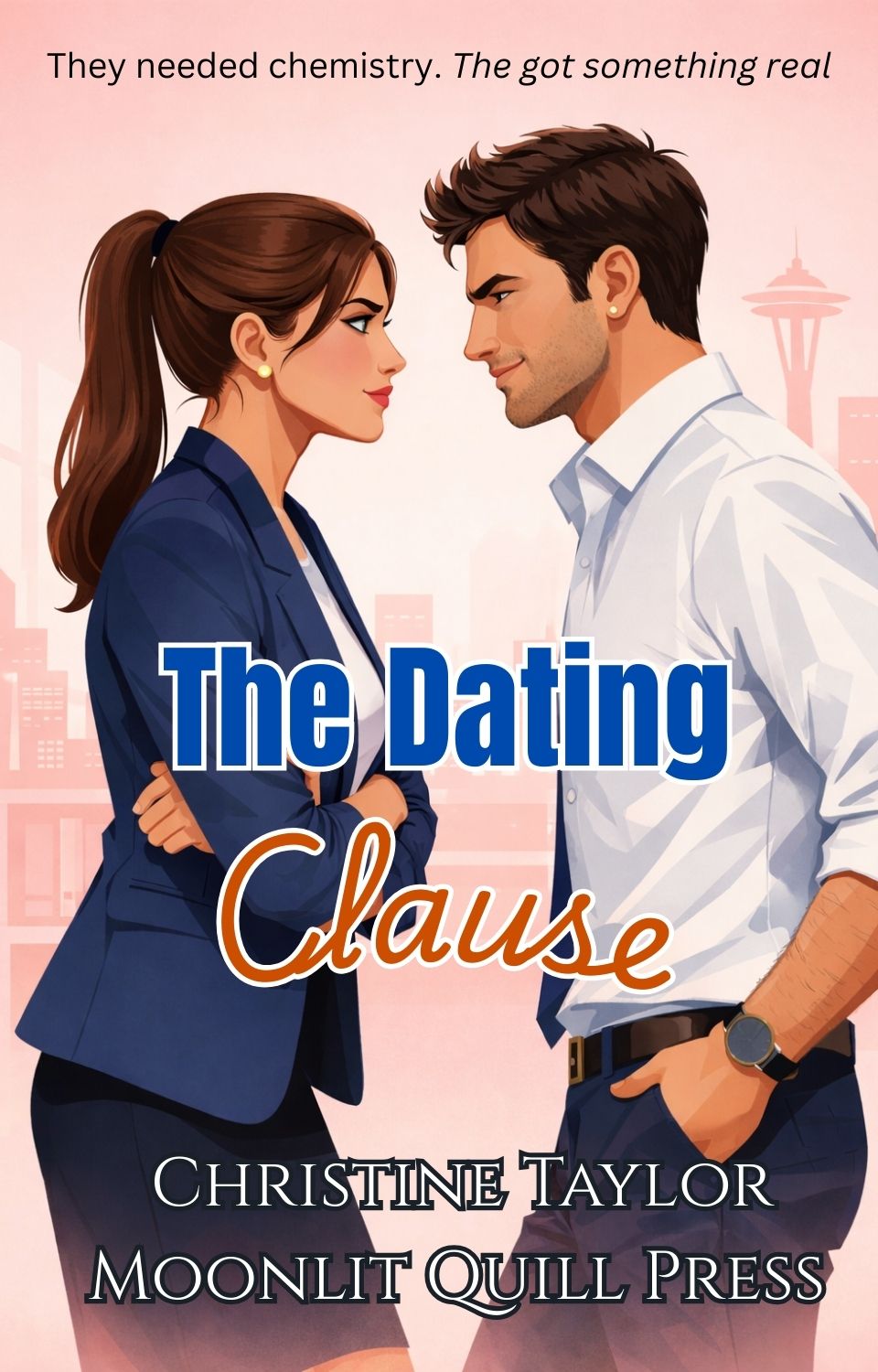
The Dating Clause
By Christine Taylor · The Clause
Welcome to Seattle, and to the rivalry-turned-arrangement between strategist Harper Sinclair and creative Mason Hale. Pour something good, gather your group, and get ready to talk about rules, risk and what happens when a pretend couple stops pretending.
Before you read
- The story begins with two rival agencies forced to share one big client. When have you been made to work with someone you did not choose, and did it change your opinion of them?
- Harper trusts planning and control, while Mason trusts instinct and charm. Which approach do you lean toward, and what do you think each style costs a person?
- Fake dating is a favorite trope for many readers. What makes an agreement like that fun to read about, and what would make it feel uncomfortable or unconvincing?
- Imagine setting rules for a relationship before it has even started. Which ones would you insist on, and which do you think would be hardest to keep?
Discussion questions
Spoilers ahead. Finish the book first.
- Mason accuses Harper of thinking that "if you control everything, nothing can touch you." By the end, how much of that is true of her, and how much is true of Mason in reverse, with his charm and his habit of winging it?
- The couple's written terms start with "No real feelings" and end up including complete discretion. Which rule do you think mattered most, which did they break first, and was breaking it a betrayal or just honesty?
- Victoria Reeves is the one who pushes them toward a "research" weekend and asks them to document it on social media. How did you feel about a client steering her agencies into a relationship experiment, and where does a professional request cross a boundary?
- Both leads need the Bellmont contract. Harper wants her own agency, and Mason is behind on invoices and a camera lease. How does money shape their choices and their trust in each other, and does the imbalance between a polished corner office and a loft in Fremont matter?
- Harper worries about her reputation if people think she is "dating a client." Did the book take her concern seriously enough? Where would you draw lines about dating, disclosure and public posting when work and romance overlap?
- Sloane Mitchell appears at the campaign preview and Harper realizes she is jealous. What does that scene reveal about each character, and did Mason handle it well?
- Harper tells Mason about her ex, who used her connections after she vouched for him, and later says he made her feel "managed instead of being loved." How do those wounds explain her walls, and how well does Mason respond to them?
- Mason says he started his agency because he was tired of doing everything alone, then discovered that being alone is "just alone." What does the book say about independence, and about asking for help?
- In the final chapters Victoria reveals that she saw something in the first meeting and set events in motion. Does that change how you read the earlier chapters, and is it generous matchmaking or an overreach of power?
- The campaign succeeds because its authenticity is real, and the ending sets a private relationship and a business partnership side by side. Do you believe the balance will hold? What would each of them need to protect, and what would you want to see in a second book?
Pairing menu
- Drink
- A flight of wines in the spirit of the Cascades tasting, ending with one shared glass, or simply black coffee with no sugar, Harper's order.
- Bite
- Fresh pasta with truffle cream, the dish at Terrazza that makes Harper close her eyes, with a chocolate croissant for anyone nervous about forgetting to eat.
- Setting
- A stone fireplace and a terrace with a mountain view, like the cabin among the pines at Bellmont Cascades, or a rooftop table with the Space Needle glowing in the distance.
Haven't read it yet?